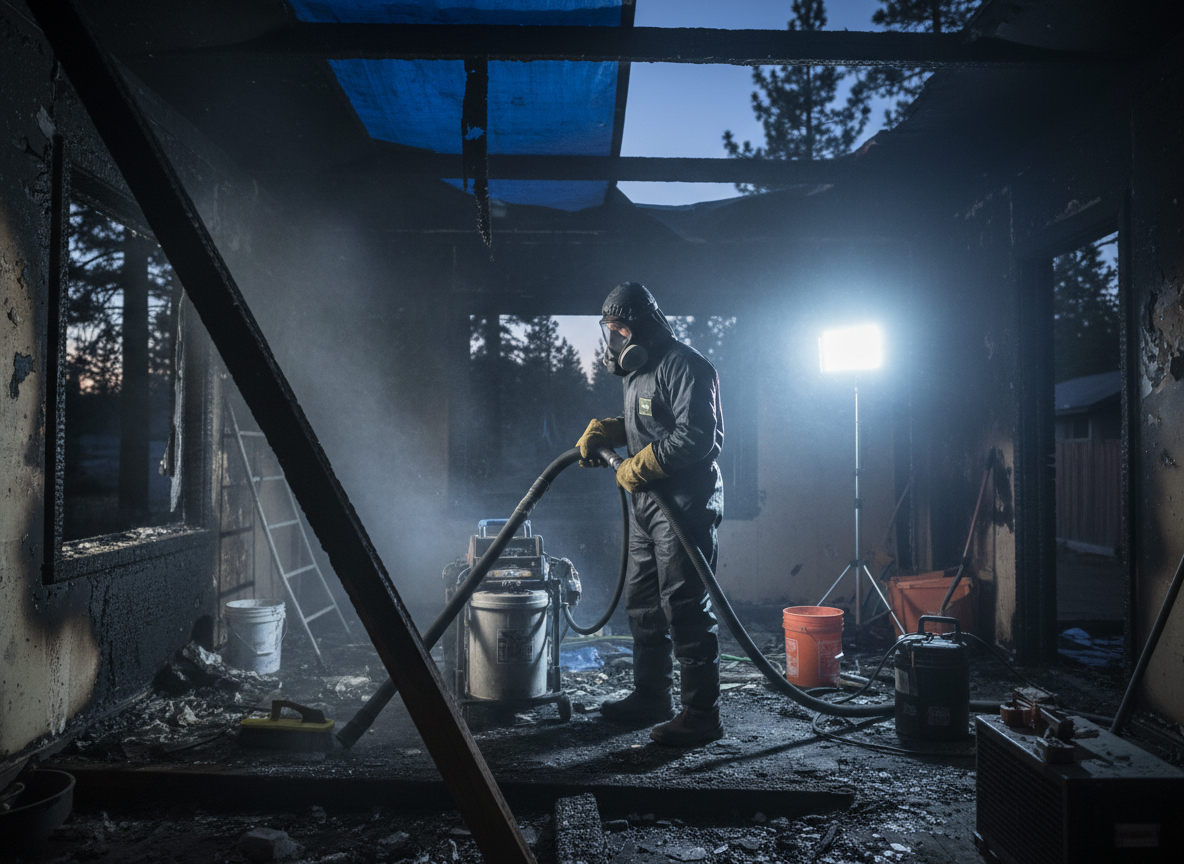
Lake Arrowhead sits in the San Bernardino Mountains with dense pine forest surrounding older wood-frame cabins and A-frame homes built along winding roads. Fire damage here often spreads quickly through attics and crawl spaces because of the dry summer fuels and the way many homes tuck into hillsides. Our crew based at 29125 Hook Creek Rd in Cedar Glen can reach most Lake Arrowhead addresses in under forty-five minutes even when snow lingers on the north-facing slopes.
Winter brings freezing nights that turn residual moisture from suppression efforts into ice inside walls, while summer heat accelerates soot set on cedar siding. Narrow driveways and limited turnaround space mean we stage equipment at the road and carry tools and dehumidifiers by hand on many jobs. We know which streets near the lake lose power first and which neighborhoods have the tightest access during the first snow.
Lake Arrowhead properties also sit inside the wildland-urban interface, so smoke can travel from burns in the surrounding national forest and settle inside closed-up vacation homes. Our 24/7 dispatch lets us start negative-air and odor removal before owners return from the city, reducing secondary damage to hardwood floors and insulation common in the area.
Around Lake Arrowhead
We regularly work near:
- 📍Lake Arrowhead Village
- 📍Rim of the World High School
- 📍Lake Arrowhead Country Club
- 📍Blue Jay Village
- 📍North Shore Drive
- 📍Lake Arrowhead Elementary School
Fire Damage Restoration Cedar Glen in Lake Arrowhead — Local Notes
- •Lake Arrowhead cabins from the 1950s-1970s often have balloon framing and cedar shake roofs that trap soot deep in wall cavities after a kitchen or chimney fire.
- •Steep lots off North Shore Drive and Grass Valley Road limit truck access, requiring smaller equipment and extra trips when hauling debris or drying units.
- •Cold winters freeze standing water left from fire hoses, so crews must thaw lines before full drying can begin on many Lake Arrowhead jobs.
- •Dense forest canopy around the lake reduces sunlight, slowing natural drying and increasing the need for aggressive dehumidification after any smoke event.