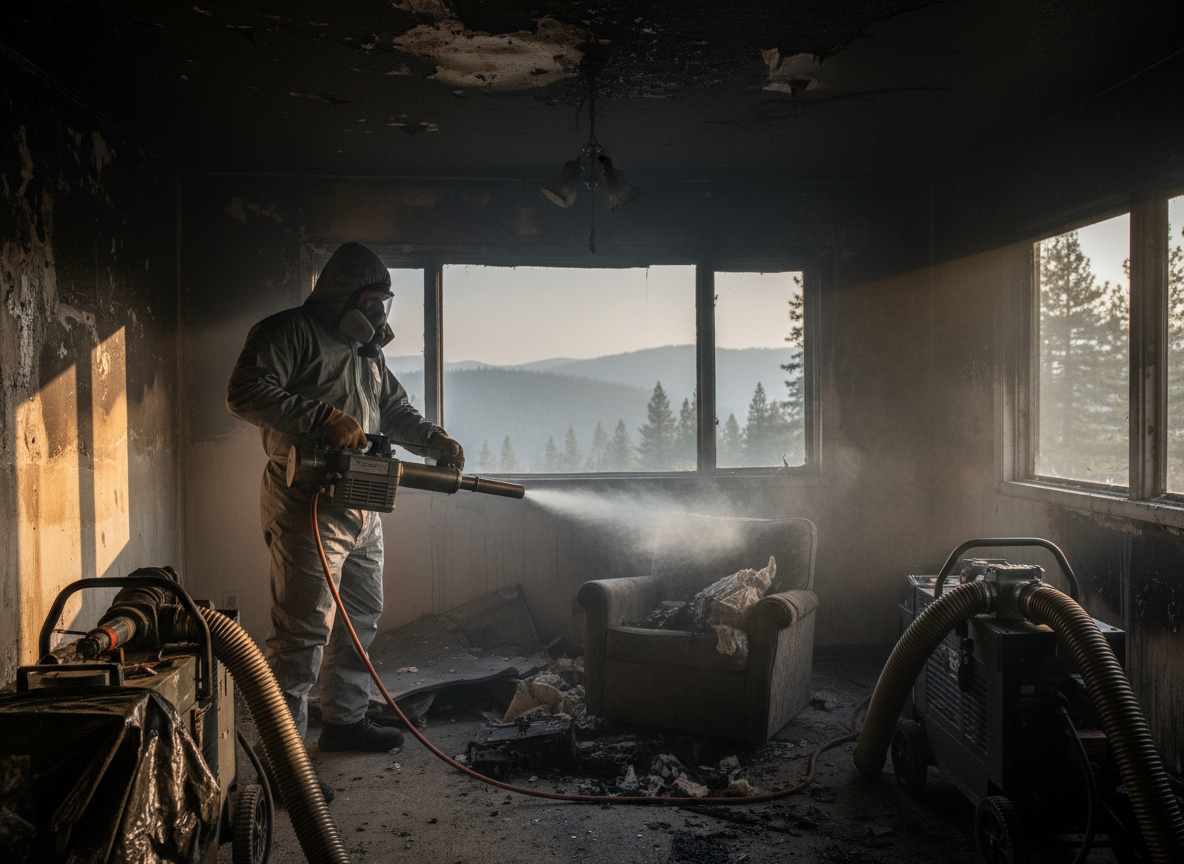
Smoke from structure fires in Cedar Glen often embeds in the porous wood framing and older insulation common to homes built decades ago around Hook Creek and near Lake Arrowhead. Cold winter temperatures in San Bernardino County slow natural off-gassing, allowing odors to linger in wall cavities and attics long after the flames are out. Technicians must use thermal fogging and hydroxyl generators to reach these hidden pockets without opening every surface.
Mountain terrain and variable winds around Cedar Glen can push smoke into unexpected areas such as crawl spaces and under decks during a fire event. Residues from synthetic materials in modern remodels react differently than those from older cedar structures, requiring distinct neutralizers to avoid secondary staining on finished surfaces. Skipping proper source removal before sealing leaves recurring smells when summer heat returns.
Ventilation strategies change with the seasons here. Winter closures trap moisture that reactivates smoke particles, while summer dryness can make certain odors more volatile. Experienced crews test air quality at multiple heights and locations rather than relying on a single reading, because layered smoke in two-story homes near the lake frequently settles unevenly.
Homeowners sometimes attempt DIY ozone treatments that only mask odors temporarily in San Bernardino County mountain properties. Professional protocols include removing charred materials first, then applying encapsulants rated for porous substrates, followed by continuous monitoring to confirm the smell does not return when HVAC systems cycle on.
Technician insight
In Cedar Glen, the thing that catches most people out with odor removal after fire is how the cold winters keep smoke trapped inside older wood-framed homes near Lake Arrowhead. Homeowners often seal up the house tight against the weather, which prevents natural airing and lets residues settle deeper into wall cavities and underfloor spaces that only show up when the first warm spell hits.
Persistent Smoke Odor in Cedar Glen Cabin
A fire in an older home off Hook Creek Road left smoke odors that returned every time the furnace ran. Inspection revealed heavy residue in the attic insulation and floor joists common to mountain builds. Crews removed the contaminated materials, performed targeted fogging, and sealed the cavities. The odor did not return once winter heating resumed.
How it works
- 1
Initial Assessment
Inspect all affected rooms, attics, and crawl spaces to map smoke migration patterns specific to Cedar Glen construction.
- 2
Source Removal
Extract charred debris and contaminated insulation before any odor treatment begins.
- 3
Odor Neutralization
Apply thermal fogging and hydroxyl processing to penetrate porous surfaces throughout the structure.
- 4
Verification and Sealing
Test air quality, then apply encapsulants where needed to lock in any remaining residues.
Pricing
Cost depends on square footage affected, depth of smoke penetration into insulation, and whether HVAC systems require separate cleaning.