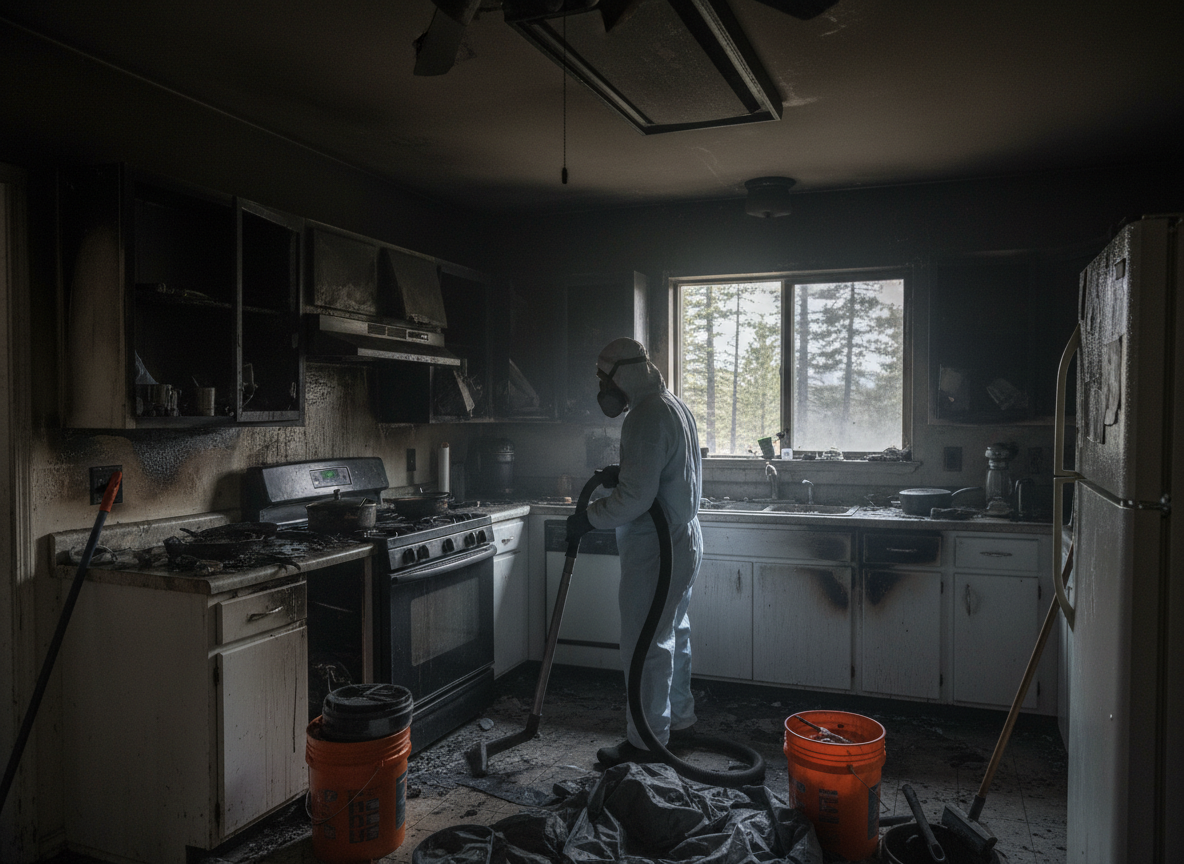
Running Springs sits in the San Bernardino Mountains above Cedar Glen with steep grades and dense tree cover that change how fire damage restoration crews move equipment and contain soot. Homes here are mostly older wood-frame cabins and A-frames built close together, so smoke travels quickly through attics and crawl spaces. Crews from 29125 Hook Creek Rd reach the neighborhood via CA-330 and work around narrow driveways and limited turnarounds that are common on streets like Pinecrest and Deer Lick.
Winter snow and summer dry lightning both hit Running Springs hard, leaving residue that sets into cedar siding and shakes. After a fire, standing water from suppression can freeze in pipes overnight, so restoration teams stage heaters and dehumidifiers the same day. Lake Arrowhead lies just east, and winds that blow across the ridge often push smoke into Running Springs neighborhoods first, requiring targeted air scrubbing before any contents cleaning begins.
Around Running Springs
We regularly work near:
- 📍Hook Creek Rd
- 📍CA-330
- 📍Running Springs Elementary School
- 📍Lake Arrowhead
- 📍San Bernardino National Forest boundary
Fire Damage Restoration Cedar Glen in Running Springs — Local Notes
- •Steep driveways off Hook Creek Rd and similar streets limit truck access, so smaller extraction units and extra manpower are staged for Running Springs jobs.
- •Many cabins use cedar or pine siding that holds soot deep in the grain, requiring media blasting or specialized cleaning not needed on newer stucco homes lower in the county.
- •Cold nights after winter fires can freeze suppression water inside walls, turning a one-day dry-out into a multi-day process with added monitoring for hidden ice pockets.
- •Proximity to San Bernardino National Forest means crews often deal with heavy ash fallout from fires outside the immediate neighborhood, requiring extra HEPA filtration on every Running Springs project.