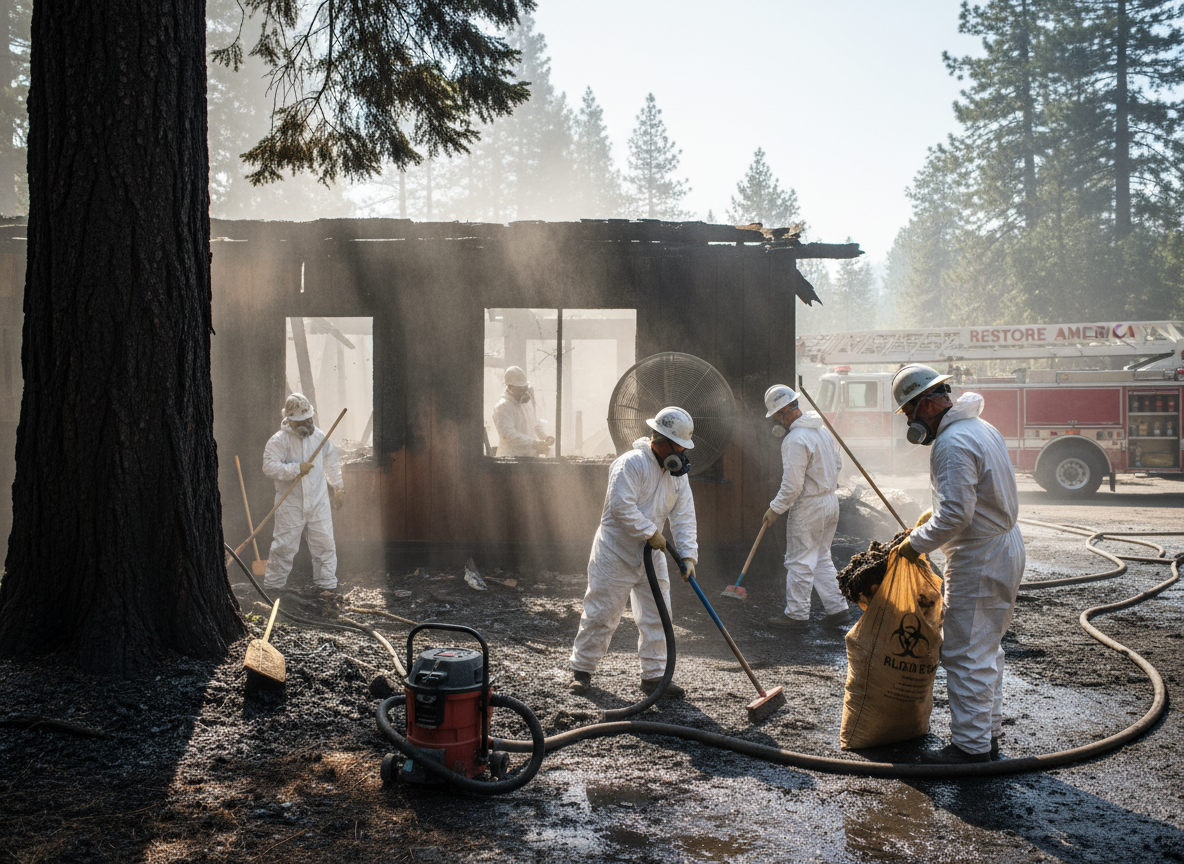
Fire damage clean up in Cedar Glen requires careful attention to how smoke travels through older wooden cabins common around Lake Arrowhead and Hook Creek Road. The mountain climate brings warm summers that dry out building materials followed by cold winters that cause condensation, allowing soot to bond deeper into walls, attics, and HVAC systems. Crews must address both visible residue and microscopic particles that settle in insulation and under flooring, where standard wiping fails. San Bernardino County homes often sit on sloped terrain that limits equipment access, so portable containment and HEPA filtration become essential to prevent cross-contamination during winter wind events.
Soot removal starts with identifying the fire's origin and mapping smoke paths through the structure. In Cedar Glen, many homes feature vaulted ceilings and exposed beams that trap oily residues from burning synthetics and wood. Technicians use specialized sponges and vacuums on these surfaces while monitoring humidity levels, since cold nights can reintroduce moisture and create secondary mold risks. Odor neutralization follows with thermal fogging or ozone treatments calibrated for the tight building envelopes typical in the area, ensuring smells do not return once heating systems activate in winter.
Final verification includes air sampling and surface testing before any reconstruction. Local terrain and seasonal swings mean crews often return after the first freeze to check for hidden residue that only appears once temperatures drop. Homeowners in neighborhoods surrounding Cedar Glen benefit from crews based at 29125 Hook Creek Rd who understand how to stage equipment on narrow driveways and coordinate with county permitting for larger clean up projects.
Technician insight
In Cedar Glen, the thing that catches most people out with Fire damage clean up is how cold winter nights pull smoke particles deeper into the insulation of older cabins near Lake Arrowhead, where dry summer air left materials porous and ready to absorb residue.
Soot Migration Through Cedar Glen Cabin
Smoke from a woodstove malfunction spread through a Hook Creek Road home during a cold snap. We found heavy residue inside wall cavities and HVAC returns due to the mountain climate. Thorough vacuuming, sponging, and odor treatment cleared the particles. The family returned without recurring smells once heating resumed.
How it works
- 1
Site Assessment
Technicians inspect the property for soot migration, document affected materials, and note access challenges created by Cedar Glen's sloped lots.
- 2
Containment and Safety Setup
Negative air machines and plastic barriers isolate work zones to protect unaffected areas from further smoke particle spread.
- 3
Soot and Residue Removal
HEPA vacuums, chemical sponges, and dry cleaning methods lift particles from walls, ceilings, and contents without spreading residue.
- 4
Odor Neutralization and Final Testing
Thermal fogging or ozone treatments eliminate lingering smells, followed by air quality checks before the home is released.
Pricing
Upfront quotes provided after on-site inspection; cost varies with soot depth, square footage, and whether winter conditions complicate access.