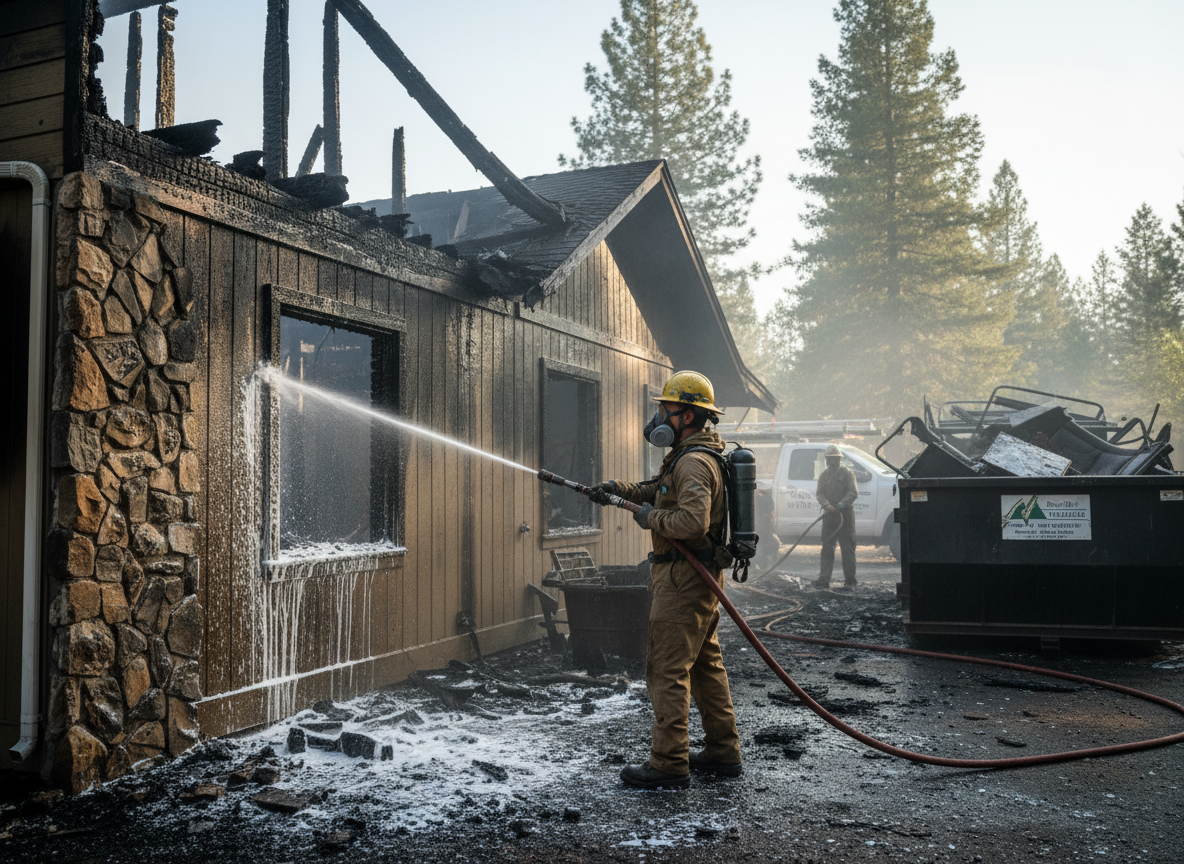
Cedar Glen sits in the San Bernardino Mountains where warm summers dry out pine and cedar structures while cold winters bring snow and freeze-thaw cycles. These swings push smoke and soot deeper into wall cavities and attics of older cabins common along Hook Creek Road and around Lake Arrowhead. Emergency crews must account for hidden char in roof decks and the way melting snow can carry residue into crawl spaces once temperatures rise.
Many homes here were built before modern fire codes, so lath-and-plaster walls and single-pane windows allow rapid smoke migration. Restoration teams inspect HVAC runs first because mountain homes often rely on forced-air systems that spread particulates house-wide within hours. Edge cases include properties on steep slopes where equipment staging is limited and where residual ash can affect well-water systems if not contained quickly.
After initial suppression, crews focus on documenting every layer of affected material before removal. In San Bernardino County, seasonal moisture from winter storms can reactivate odors in insulation if not fully extracted, requiring repeated air scrubbing. Local operators know to check for embers in leaf litter around foundations, a step that prevents re-ignition when dry summer winds return.
Technician insight
In Cedar Glen, the thing that catches most people out with Emergency fire damage restoration is the steep driveways and narrow roads around Hook Creek Road that limit equipment access once winter snow arrives, forcing crews to stage smaller loads and extend timelines on hillside lots near Lake Arrowhead.
Attic Fire Spread in Cedar Glen Cabin
A homeowner near Lake Arrowhead reported smoke after an attic electrical issue. Crews found soot lodged in insulation and wall cavities typical of older mountain construction. We removed affected materials, cleaned the HVAC, and ran dehumidifiers through a freeze cycle. The property passed clearance testing before seasonal snow arrived.
How it works
- 1
On-Site Assessment
Technicians arrive within hours, document visible and hidden damage, and test air quality around the structure.
- 2
Safety And Containment
Secure the site, set up negative air pressure, and protect unaffected areas from further smoke migration.
- 3
Debris And Soot Removal
Remove charred materials, clean surfaces, and extract residue from ducts and cavities common in mountain homes.
- 4
Drying And Odor Control
Apply drying equipment suited to cold winter conditions and run air scrubbers until readings return to normal.
- 5
Final Verification
Re-test surfaces and air, then coordinate with owners on any remaining repairs needed before re-occupancy.
Pricing
Upfront quotes after inspection; final cost depends on square footage affected, materials involved, and seasonal access conditions.