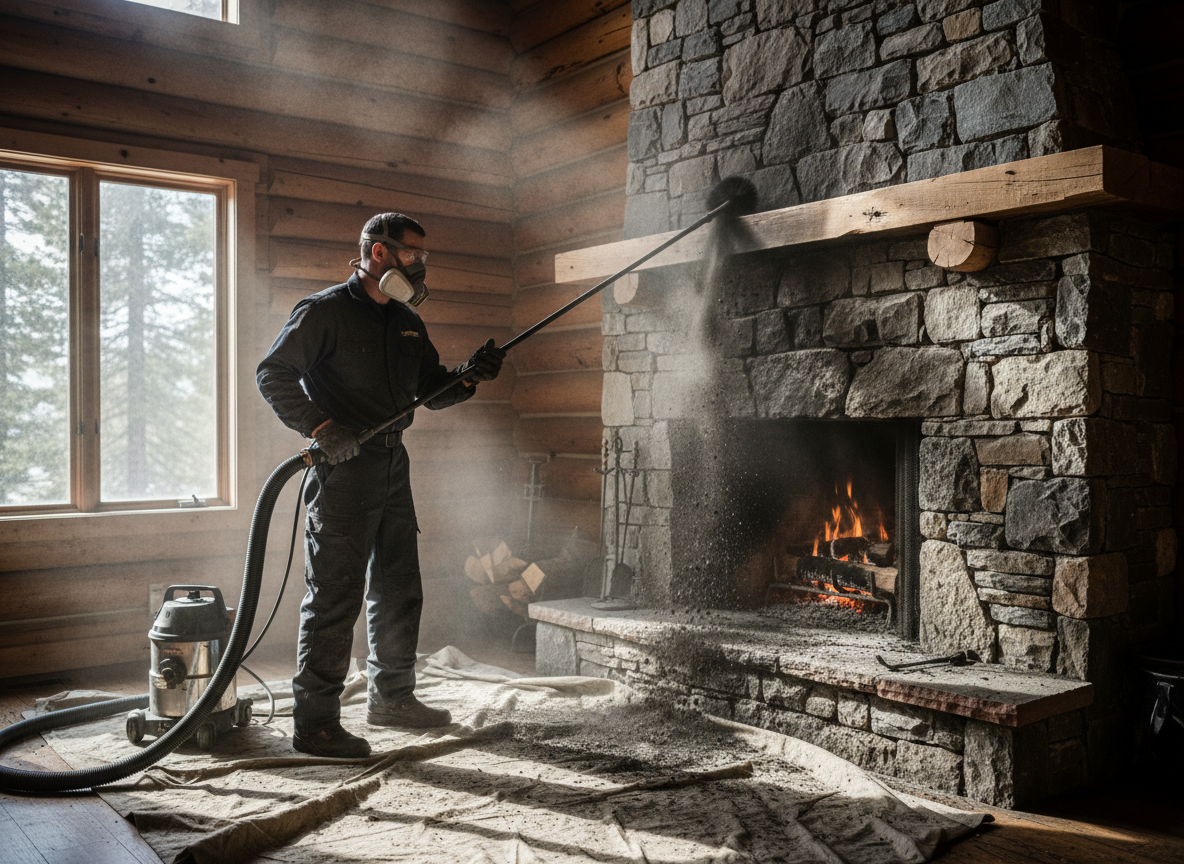
Soot from structure fires in Cedar Glen clings to porous wood siding and older cabin interiors common around Hook Creek Road and Lake Arrowhead. Cold winter air in the San Bernardino County mountains slows particle settling and forces technicians to use negative-air machines longer to prevent redistribution into HVAC systems. Warm summer days can bake residues deeper into drywall, requiring pH-neutral cleaners that avoid damaging cedar or pine finishes typical of local builds.
Edge cases include soot migration through attics where insulation traps fine particles after fires fueled by dry brush on steep terrain. Technicians inspect for hidden deposits behind electrical boxes and in crawl spaces, as mountain humidity swings can reactivate acidic soot and corrode wiring. Code considerations in San Bernardino County often require documenting removal methods before insurance sign-off to meet local occupancy standards.
Homeowners sometimes overlook soot on textured ceilings or inside chimney flues, where incomplete cleaning leads to recurring odors during cold snaps. Proper containment with plastic sheeting and HEPA filtration protects unaffected rooms in compact Cedar Glen lots. Work proceeds room by room, testing surfaces with white cloths until no transfer occurs, ensuring mountain homes return to safe, odor-free condition without introducing excess moisture that could freeze in winter.
Technician insight
In Cedar Glen, the thing that catches most people out with soot removal is how winter temperature drops trap fine particles inside the older wooden homes along Hook Creek Rd, letting residues re-settle days after initial cleaning if negative air isn't maintained long enough.
Cedar Glen Cabin After Brush Fire
Soot had settled throughout a single-story home near Lake Arrowhead following a nearby brush fire. Inspection revealed heavy deposits inside attic insulation and along baseboards where cold air pooled. Crews ran containment and HEPA extraction over two days, then verified clearance with surface tests. The property passed odor checks and reopened without lingering residue.
How it works
- 1
Site Assessment
Technicians evaluate soot spread through Cedar Glen homes, noting wood surfaces and HVAC paths affected by mountain climate conditions.
- 2
Containment Setup
Plastic barriers and negative pressure isolate work zones to prevent soot migration into unaffected areas near Lake Arrowhead.
- 3
Surface Cleaning
HEPA vacuums and pH-balanced agents lift residues from walls, ceilings, and fixtures without damaging older local construction materials.
- 4
Final Verification
White glove testing and odor checks confirm removal before restoring normal access in San Bernardino County properties.
Pricing
Costs depend on square footage treated, soot density, and access challenges in mountain terrain homes.