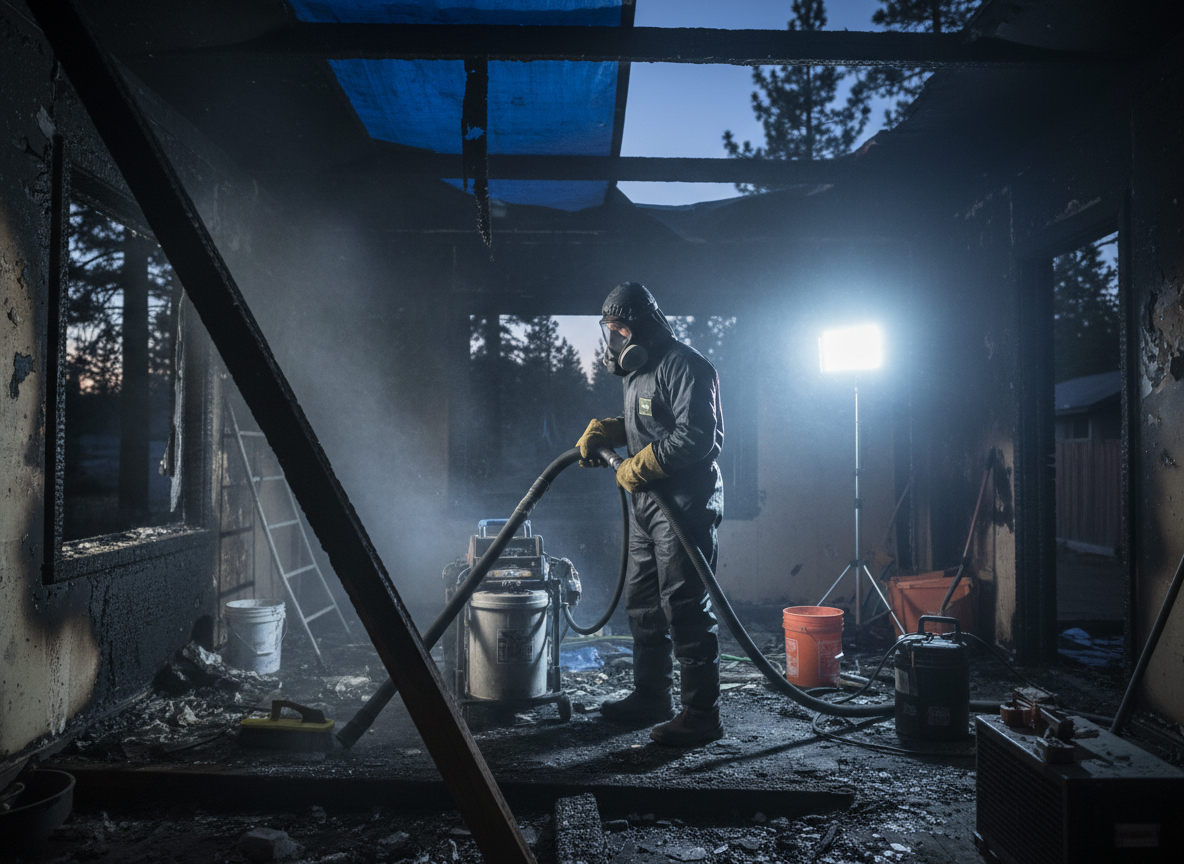
Cedar Glen sits at elevation in the San Bernardino National Forest where homes often feature older wood framing and shake roofs that ignite quickly and allow smoke to travel through attics and wall cavities. Once winter temperatures drop, crews must work around frozen ground and limited daylight while preventing secondary water damage from suppression efforts. Rapid extraction of charred debris and use of negative air machines keeps particulates from settling into the remaining structure before odors embed in insulation and drywall.
Lake Arrowhead and surrounding ridges create wind patterns that push smoke downhill into lower Cedar Glen neighborhoods, often affecting properties not directly touched by flames. Technicians inspect HVAC systems early because ductwork in these homes frequently runs through crawl spaces where soot can recirculate for months. HEPA filtration and thermal fogging are adjusted for the dry summer air that makes odor neutralization slower than in coastal regions.
Access roads narrow quickly after any fire event, so equipment staging happens from the Hook Creek Road address to reach properties before additional weather moves in. Contents are inventoried on site when possible because many residents store seasonal items in detached garages that suffer heavy smoke exposure. Final clearance testing accounts for the porous granite soils that can hold moisture longer, affecting how quickly rebuilt walls can be sealed.
Technician insight
In Cedar Glen the thing that catches most people out with 24 hour fire restoration is how quickly smoke travels through the gaps in older single-wall construction once the cold mountain nights pull air downward; homeowners often seal the obvious burn room but miss the attic bypasses that let odors return weeks later.
Smoke Migration Through Attic in Cedar Glen
A kitchen flare-up sent heavy smoke into the attic of a 1970s cabin near Hook Creek. Inspection showed soot had bypassed the ceiling insulation and entered wall cavities shared with the living room. Crews removed affected insulation, cleaned all surfaces, and ran continuous filtration until readings cleared. The owner returned within five days without lingering odor complaints.
How it works
- 1
Immediate Dispatch
Technician leaves the Cedar Glen location within minutes of the call and arrives with air scrubbers and containment supplies suited for mountain terrain.
- 2
Safety And Scope Assessment
Structural stability is checked first, followed by mapping of smoke migration paths through the specific layout of older Cedar Glen cabins.
- 3
Debris Removal And Cleaning
Charred materials are removed, surfaces are cleaned with appropriate agents, and HVAC systems receive initial treatment to stop cross-contamination.
- 4
Odor Neutralization And Drying
Thermal fogging and dehumidification address embedded smoke while monitoring humidity levels that shift with cold nights and warm days.
- 5
Final Clearance
Air quality testing confirms the home meets habitability standards before reconstruction planning begins.
Pricing
Upfront quotes provided after on-site inspection; final cost depends on square footage affected, smoke migration depth, and whether contents require off-site cleaning.