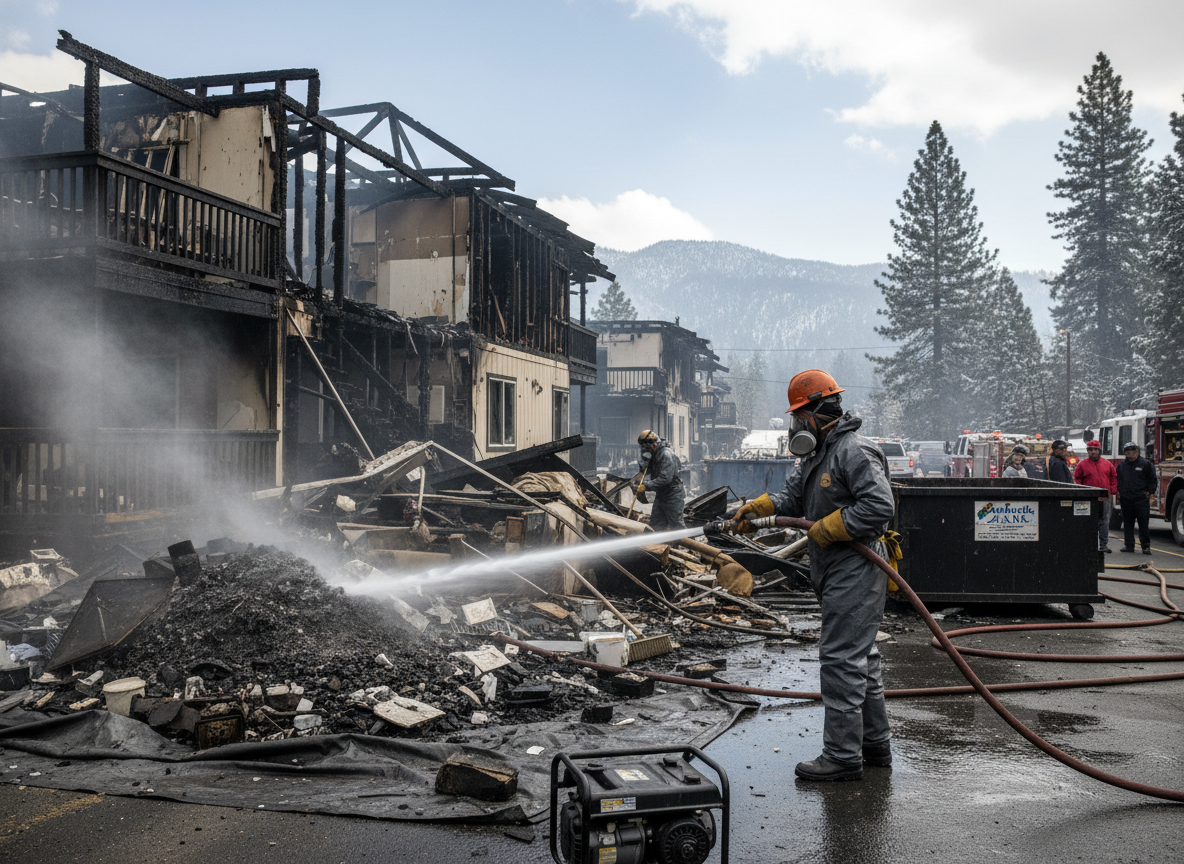
Apartment fires in Cedar Glen often leave heavy soot on textured ceilings and older wood paneling common in San Bernardino County mountain buildings. Cold winter nights trap smoke particles inside units because residents keep windows closed, so restoration crews must run negative air machines longer than in valley locations. Lake Arrowhead humidity swings also cause hidden moisture behind drywall once suppression water evaporates, requiring moisture meters on every wall before drywall is opened.
Smoke can travel through shared HVAC ducts and attic spaces that connect multiple units, so cleanup crews map the entire building rather than treating only the fire unit. In summer, warm winds push soot deeper into carpet and cabinetry, while winter freezes can lock residues into porous surfaces until heat is applied. Technicians use pH-neutral cleaners on laminate and tile surfaces found in many Cedar Glen apartments to avoid damaging finishes that older mountain buildings often contain.
Electrical boxes and outlet covers must be removed because soot migrates behind them and can cause future shorts once power is restored. Odor removal requires pairing thermal fogging with hydroxyl generators because mountain air inversions keep smells trapped longer than in open terrain. Final clearance testing checks both visible surfaces and HVAC registers to prevent callbacks when tenants return after cold-weather evacuations.
Technician insight
In Cedar Glen, the thing that catches most people out with Apartment fire cleanup is how fast smoke moves through the shared attics and single-wall construction typical around Hook Creek Road. Cold winter nights keep windows shut, so soot stays suspended longer and settles deeper into carpet pad and cabinet interiors than crews expect from valley jobs.
Two-Unit Smoke Migration After Kitchen Fire
A cooking fire in a lower Cedar Glen apartment sent smoke through the common attic into the unit above. We mapped moisture behind the shared wall, removed saturated insulation, and ran drying equipment for four days. Thermal fogging cleared the odor; both units passed clearance testing and tenants moved back within a week.
How it works
- 1
Secure And Assess
Board openings, document damage, and test for hidden moisture and soot migration through shared walls and ducts in the Cedar Glen building.
- 2
Remove Soot And Debris
HEPA vacuum and wipe all surfaces, dispose of contaminated porous materials, and protect unaffected units from cross-contamination.
- 3
Dry And Deodorize
Deploy air movers and dehumidifiers suited to cold mountain nights, then apply thermal fogging and hydroxyl treatment to neutralize smoke odor.
- 4
Restore And Clear
Repair or replace affected drywall and trim, clean HVAC components, and perform final clearance testing before tenants return.
Pricing
Upfront quotes based on square footage affected and number of units involved; every job differs due to smoke travel through mountain construction.