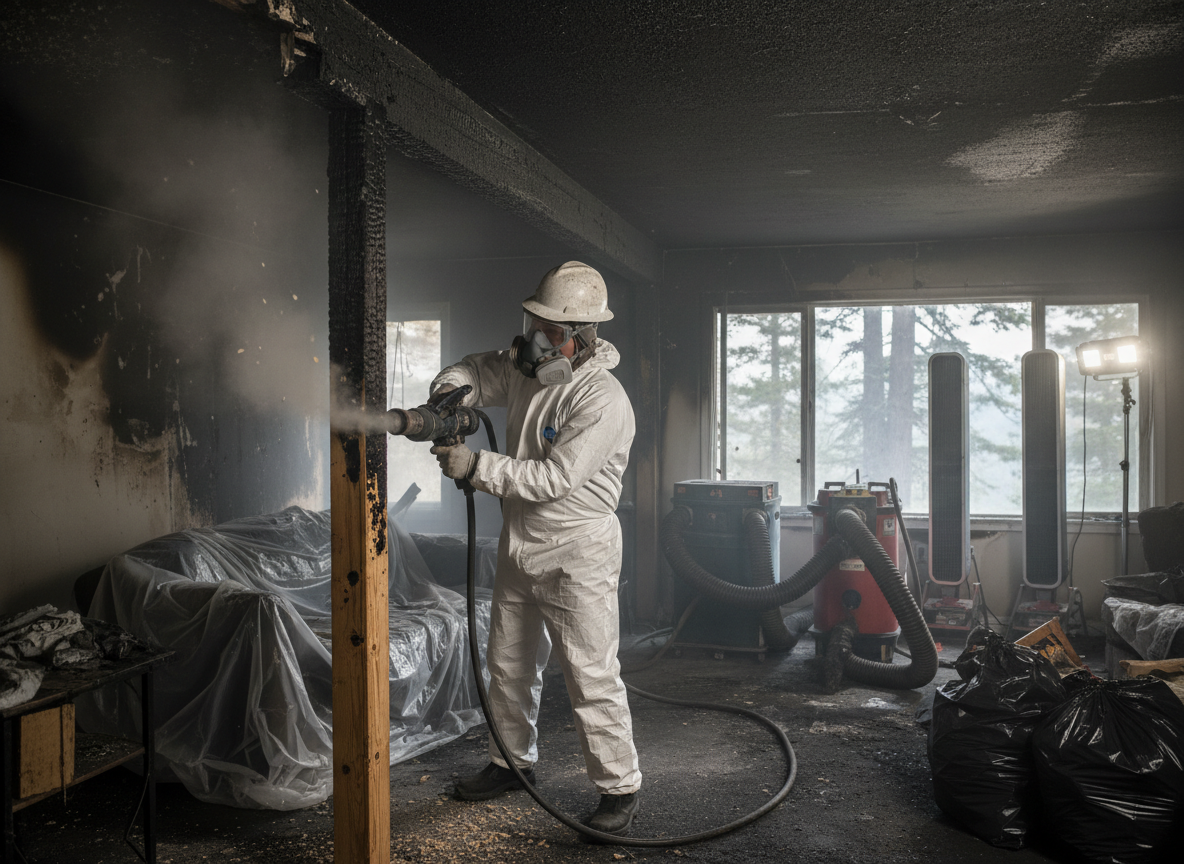
Cedar Glen sits in the San Bernardino Mountains where warm summers dry out pine and cedar forests and cold winters bring freezing nights. Older cabins and homes built decades ago use tongue-and-groove wood, plaster, and limited insulation that readily absorb smoke particulates. After a fire, crews must open walls and ceilings to reach hidden soot because the dense forest terrain limits quick ventilation and the cold air slows evaporation of any water used during suppression.
Smoke from wildland fires common near Lake Arrowhead carries resins and ash that bond differently to surfaces than house-fire smoke. In winter the temperature swings cause condensation inside attics, locking odors into insulation and HVAC ductwork. Restoration teams use negative air machines and thermal fogging sized for these compact mountain layouts, then monitor moisture with meters because trapped water can freeze and expand behind paneling before spring thaw.
San Bernardino County building practices in Cedar Glen often include steep driveways and limited access roads that complicate equipment delivery after a fire. Crews stage containment barriers early to protect neighboring properties on shared slopes. Every job includes removal of charred material down to sound substrate, followed by sealing with stain-blocking primers formulated for cold-weather application so finishes cure properly before temperatures drop again.
Homeowners sometimes attempt DIY cleaning with household products that leave residues attracting more soot in the dry mountain air. Professional protocols include HEPA vacuuming, chemical sponges, and air scrubbing calibrated to the volume of each room. Final clearance testing checks for both visible ash and odor migration through shared chases common in multi-level cabins around Hook Creek.
Technician insight
In Cedar Glen, the thing that catches most people out with fire and smoke damage restoration is how the steep terrain and cold winter nights trap moisture behind paneling after firefighters leave; older cabins near Lake Arrowhead often need extra drying days because freezing temperatures halt evaporation and let hidden water migrate into shared walls.
Wildfire Smoke in Cedar Glen Cabin
A structure fire on a neighboring ridge sent smoke through a Cedar Glen home near Hook Creek. We found heavy soot in attic insulation and HVAC returns that standard cleaning would miss. Containment barriers were set on the sloped lot, followed by wall opening, HEPA scrubbing, and odor treatment suited to freezing overnight lows. The home passed clearance testing before the next cold front arrived.
How it works
- 1
Emergency Board-Up and Site Security
Secure the structure against weather and intrusion while documenting the scene for insurance.
- 2
Detailed Assessment and Documentation
Inspect all affected materials, test for hidden smoke migration, and map moisture in walls and attics.
- 3
Containment and Air Filtration
Isolate damaged zones and run HEPA air scrubbers to capture airborne particulates before cleaning begins.
- 4
Cleaning, Odor Removal, and Drying
Remove soot, treat surfaces, neutralize odors, and dry any water introduced during firefighting.
- 5
Reconstruction and Final Clearance
Repair or replace damaged finishes and verify the home meets pre-loss condition before return.
Pricing
Upfront quotes after on-site inspection; final cost depends on square footage affected, materials involved, and winter drying requirements.