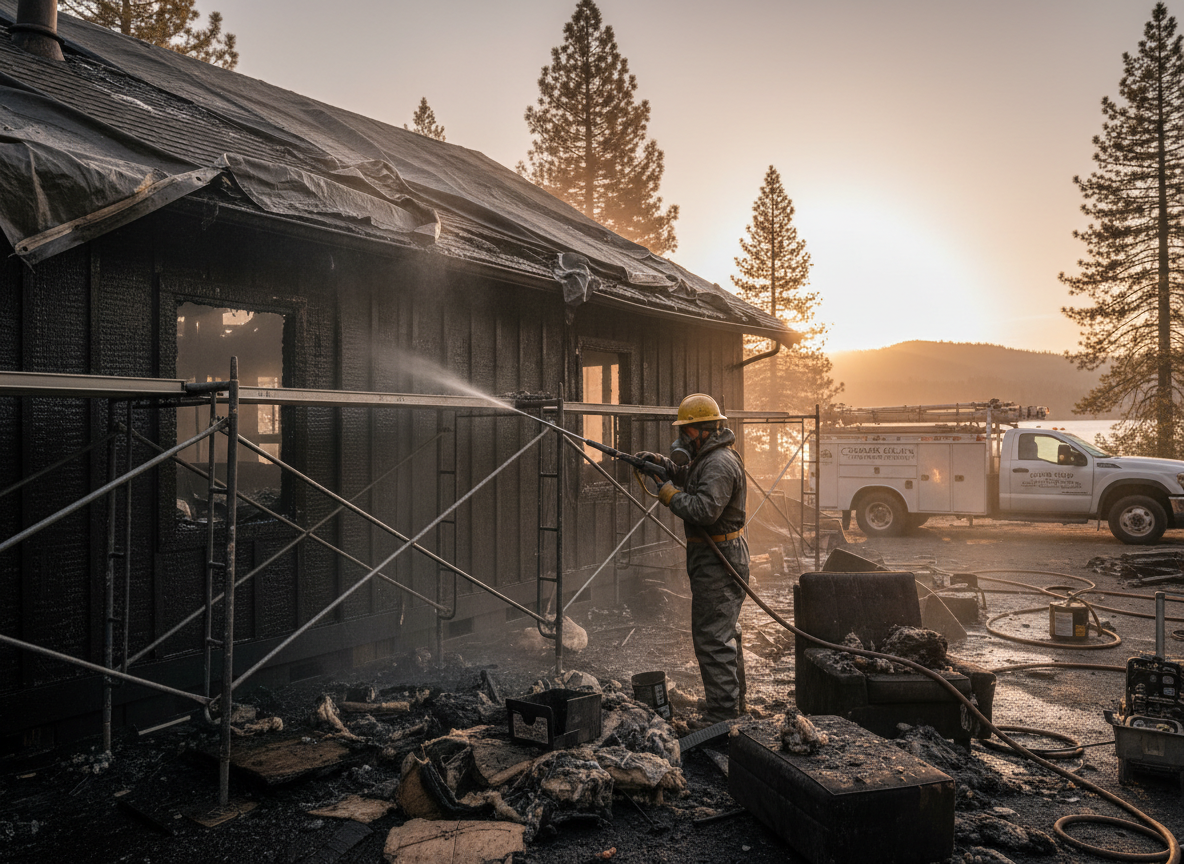
Cedar Glen sits in the San Bernardino Mountains where homes often feature older wood construction and steep driveways that complicate equipment access after a fire. Firefighting water combined with cold winter nights can freeze inside wall cavities, leaving hidden moisture that later feeds mold once temperatures rise. Restoration crews must account for this freeze-thaw cycle when planning drying equipment and containment.
Summer lightning strikes and wood-stove use both increase fire risk in the area around Lake Arrowhead. Soot from burning pine and cedar penetrates porous materials faster than urban fires, requiring specialized cleaning agents and longer dwell times. Homeowners who attempt DIY cleaning often spread acidic residue into HVAC systems that run constantly during temperature swings.
San Bernardino County building codes require permits for any structural repairs after fire damage, and inspectors check for proper ventilation upgrades in older cabins. Crews document every step so owners can meet those requirements without delays. Terrain slopes also mean debris removal must follow strict erosion-control rules to protect nearby watersheds.
24/7 response from the Hook Creek Road location lets crews reach properties before additional weather damage occurs. Winter access can be limited by snow, so early board-up and tarping decisions directly affect how much secondary loss occurs inside the structure.
Technician insight
In Cedar Glen the thing that catches most people out with fire damage restoration near me is how quickly firefighting water freezes inside walls during a January night; we have to pull baseboards and run heat before the moisture turns into hidden mold that shows up when the first warm spell hits.
Cedar Glen Cabin After Wood-Stove Fire
Soot traveled through the HVAC of a 1970s cabin near Hook Creek Road. Inspection found ice inside exterior walls from winter temperatures. Crews opened cavities, dried the structure over several days, then rebuilt with permitted materials before spring melt could cause further issues.
How it works
- 1
Emergency Board-Up
Secure openings and roof sections to prevent weather entry while assessment continues.
- 2
Soot And Smoke Removal
Apply pH-neutral cleaners matched to the burned materials common in mountain homes.
- 3
Moisture Mapping
Use meters to locate water left from firefighting that can freeze overnight.
- 4
Structural Drying
Place equipment sized for the home's insulation type and current outdoor temperatures.
- 5
Rebuild And Final Clearance
Complete permitted repairs and verify air quality before re-occupancy.
Pricing
Upfront written quotes after on-site inspection; final cost depends on square footage affected, depth of soot penetration, and any winter access limits.