2026-10-16 ·
What Winter Rains Mean for Recently Burned Properties in Cedar Glen
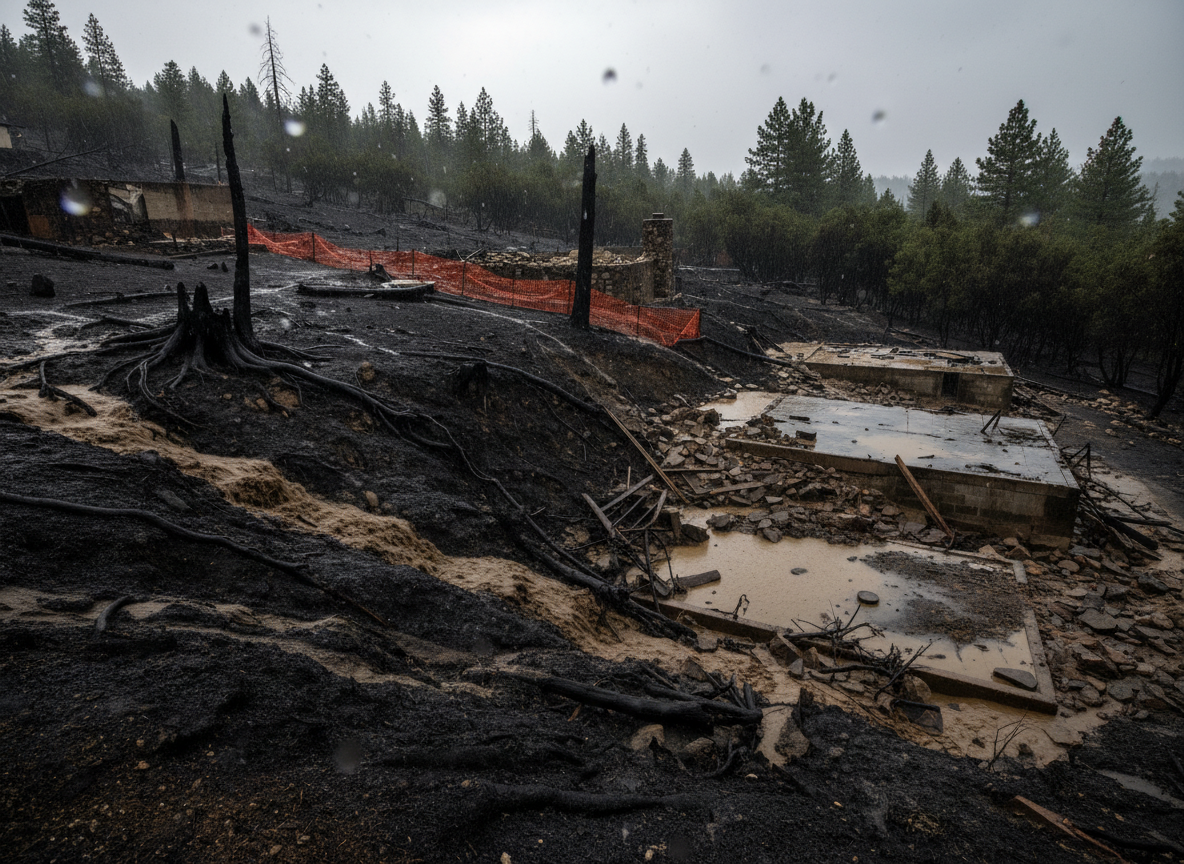
Winter rains in Cedar Glen can trigger mudslides and force water into fire-weakened foundations within the first 48 hours of sustained precipitation because burned slopes lose root systems and develop hydrophobic soil layers that shed water instead of absorbing it.
Erosion and Mudflow on Burned Slopes
Cedar Glen sits on steep terrain above Lake Arrowhead in San Bernardino County where winter storms drop several inches of rain in short bursts after dry summers. Once a wildfire removes chaparral and pine cover, rain runs straight down slopes instead of soaking in, carrying ash, charred debris, and loose topsoil. Properties along Hook Creek Road and similar draws see channels form quickly, undermining driveways and crawl spaces. Homeowners notice rills widening into gullies within a single storm cycle. The same pattern repeats on lots near Rimforest and Running Springs where recent burns left exposed granitic soils. Monitoring slope movement daily after the first heavy rain helps catch small slides before they reach foundations. Clearing loose material from drainage swales before storms arrive reduces the volume that can mobilize downhill.
Water Intrusion Through Fire-Damaged Roofs and Walls
Burned roof decks and missing underlayment let winter rain reach interior framing within hours. In Cedar Glen’s mountain climate, cold nights following daytime showers cause repeated freeze-thaw cycles that crack already charred rafters. Water travels along soot-coated sheathing into wall cavities, promoting hidden mold within days. Properties near Twin Peaks and Blue Jay often show staining on ceilings two to three weeks after the first winter rain if temporary tarps were not installed. Checking attic spaces after each storm reveals new wet spots before drywall saturation occurs. Redirecting downspouts away from foundation walls prevents additional hydrostatic pressure against fire-weakened stem walls common in older Cedar Glen cabins.
Soil Saturation and Foundation Movement
San Bernardino County mountain soils become saturated after successive winter storms because underlying bedrock limits drainage. On recently burned lots the lack of vegetation accelerates runoff concentration, increasing the chance that water pools against foundations. This saturation can cause minor settling in homes built on fill or native decomposed granite. Residents in Crestline and Highland report new cracks in stucco and concrete slabs following heavy January rains on burned parcels. Installing temporary French drains or gravel trenches diverts flow before it reaches footings. Documenting any new cracks with dated photos supports later evaluation of whether winter moisture worsened fire-related structural issues.
Practical Steps After the First Winter Storms
Walk the perimeter after each rain event to note new erosion rills or standing water near the foundation. Photograph any fresh staining on ceilings or walls and measure crack widths if they appear. Clear gutters and downspouts of ash and needles before the next front arrives. For properties that also sustained smoke damage, compare interior humidity readings before and after storms to spot moisture that entered through compromised envelopes. Fire and flood restoration addresses combined water and char issues when saturation follows burn damage. Review prior ash removal work documented in Clearing Ash and Soot from Homes Near the San Bernardino Mountains to see whether earlier cleanup left any low spots that now collect runoff. Properties in Lake Arrowhead follow the same sequence because the shared mountain climate produces identical winter rain patterns on burned slopes.